Years in business
20+

Water Hygiene
If you are responsible for a building, you carry a duty of care for the water in it. We provide a complete water hygiene service, and the documentation that shows the duty is being met.
From Legionella risk assessment through sampling and temperature monitoring to the records themselves, everything you need to show your water is fit for purpose and meeting the standards.









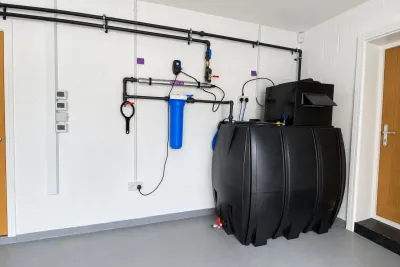
We run the whole duty under the Approved Code of Practice L8: Legionella risk assessment, sampling and temperature monitoring, the control and remedial work when a risk is found, and the documentation that proves it was done.
The risk is ordinary as well as serious. Cooling towers, pools and spas, and everyday hot and cold water systems can all harbour Legionella, and the duty sits with whoever controls the premises.
The point of a proper regime is that your water stays fit for purpose, certified as meeting the standards, with the records to show it if you are ever asked.
Managing bacterial risk, Legionella above all, in a building’s water systems: knowing where it sits, controlling it, and holding the records.
The duty is legal and it stays with whoever controls the premises. Appointing a contractor does not move it, and neglect carries real exposure.
A regime run to ACOP L8: risk assessment, monitoring, remedial work where a risk is found, and documentation you can produce on the day.
20+
200+
24h

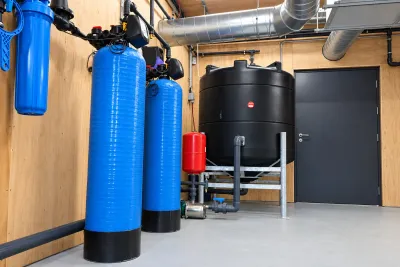
A few of the supplies we've designed, installed and looked after.
A pub's supply condemned by the local authority after heavy rain.
Cleaned, re-filtered and UV-treated, back to a supply the authority could pass.
Treatment and chlorination for a house coming back into real use.
A bespoke system for a National Trust restoration.
Two failed boreholes and a ground-source heat system that would not run.
One supply across borehole, rainwater and mains, plus a chlorine-free pool.
If you are responsible for a building or its water systems, you have a legal duty of care to manage the risk from Legionella and to keep people safe, under the Health and Safety at Work etc Act 1974 and the Management of Health and Safety at Work Regulations. In practice that means understanding the risk in your systems, controlling it, and being able to show what you have done. We help you meet that duty in a way that is proportionate to your building rather than burdensome.
Failing to manage the risk is not only dangerous, it is a serious legal exposure. Where negligence leads to harm, the consequences can extend as far as a charge of corporate manslaughter, quite apart from the human cost of an outbreak. Managing the risk properly, and being able to show it, is far less costly than the alternative.
The legal duty rests with the person in control of the premises or the water system, and that responsibility cannot be handed over simply by appointing a contractor. What a good contractor does is help you discharge that duty competently, with the right assessments, controls and records in place. We work alongside you so the obligations are met, while making clear where the responsibility sits.
The central reference is the Approved Code of Practice L8, which sets out how to control the risk from Legionella in water systems. Depending on your building and supply, other frameworks also apply, including BS 8550:2010, BSRIA BG29/2012, the Water Supply (Water Fittings) Regulations 1999 and, for private supplies, the Private Water Supplies Regulations 2009, all underpinned by the Health and Safety at Work etc Act 1974. We help you identify which of these bear on your site so nothing is overlooked.
The risk applies to a range of systems, including cooling towers, pools and spas, and ordinary hot and cold water services. Anywhere water is stored, allowed to stagnate, or held at temperatures that suit bacterial growth deserves attention. Part of our role is to identify which parts of your system carry the greatest risk so that control is focused where it matters.
As a general guide, a Legionella risk assessment is typically reviewed every two years, with an annual review in between to confirm that circumstances have not changed. Sampling and monitoring within that period depend on the system and the level of risk it carries, so the right interval is the one set by your risk assessment rather than a fixed rule. We advise on a schedule that suits your building and keeps you compliant.
You receive the compliance documentation that records the risk assessment, the controls in place and the monitoring carried out. This gives you clear evidence that your duty of care is being met and a firm basis for managing the system going forward. Should you ever need to demonstrate compliance, the paperwork is there and in order.
Water treatment is only ever part of the picture. Whatever your property needs, it is looked after by the same team.
Tell us about your property and what you need.